




In modern electrical systems, cable protection is no longer limited to basic insulation. Industrial machinery, automotive wiring systems, aerospace equipment, and communication networks all require advanced protective solutions capable of resisting heat, corrosion, vibration, and electromagnetic interference. Aluminum Foil Corrugated Conduit has become one of the most reliable solutions for these demanding environments because of its lightweight structure, excellent flexibility, and outstanding thermal shielding performance. Based on high-quality aluminum foil and reinforced corrugated construction, this conduit offers a durable and efficient method for protecting sensitive cables and wiring systems.
Compared with traditional plastic tubing, corrugated electrical conduit provides significantly better heat resistance and EMI shielding. The corrugated structure allows the conduit to bend easily without collapsing, making it suitable for installations in tight spaces or complex routing systems. In automotive engine compartments and industrial automation systems, cables are frequently exposed to extreme temperatures, mechanical friction, and continuous vibration. Aluminum foil acts as a reflective barrier that helps dissipate radiant heat while reducing thermal damage to internal wiring. This improves cable lifespan and reduces maintenance costs in long-term applications.
One of the biggest advantages of heat reflective conduit technology is its ability to maintain stable performance under harsh operating conditions. Aluminum foil naturally reflects heat and forms a protective oxide layer that improves corrosion resistance. According to product technical specifications, aluminum foil corrugated conduits can operate in temperatures ranging from -50℃ to +200℃ while maintaining flame resistance ratings such as UL94 V0 and VW-1. These features make the conduit suitable for high-temperature industries including transportation systems, aerospace engineering, HVAC systems, renewable energy equipment, and electronic manufacturing.
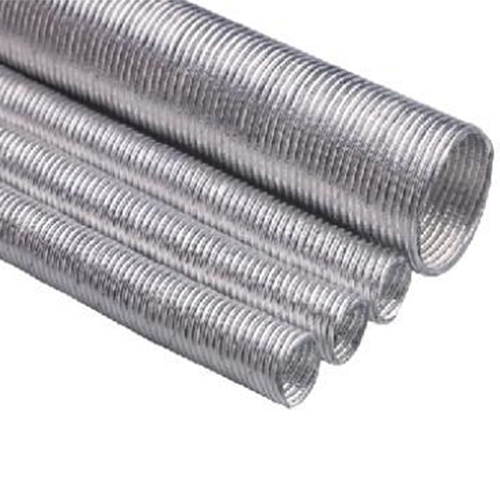
Another important benefit of flexible aluminum conduit is electromagnetic shielding performance. In environments containing high-frequency electronic equipment or sensitive communication systems, electromagnetic interference can affect signal transmission and system stability. The conductive aluminum foil layer functions similarly to a Faraday cage, minimizing EMI and RFI interference around enclosed cables. This makes aluminum foil conduit especially useful for communication networks, robotics, industrial control systems, and advanced automotive electronics where stable signal integrity is essential.
Installation efficiency is also a major reason why many industries choose aluminum foil corrugated conduit over rigid metal tubing. The lightweight design allows workers to install the conduit quickly without specialized equipment. It can be cut easily using scissors or standard cutting tools and routed through narrow or irregular spaces without damaging internal cables. In modern manufacturing facilities where installation speed and flexibility are critical, this simplifies cable management while improving overall operational efficiency.
In addition to thermal and mechanical protection, aluminum foil conduit products are increasingly designed to meet environmental and safety standards. RoHS-certified materials ensure the conduit is free from hazardous substances while maintaining long-term durability in outdoor or humid environments. Combined with fiberglass reinforcement or additional protective sleeves, aluminum foil conduit systems can provide enhanced abrasion resistance and extended service life for critical electrical infrastructure.
As industries continue to demand safer and more efficient cable protection systems, Aluminum Foil Corrugated Conduit remains an essential solution for modern engineering applications. Its balance of flexibility, heat resistance, EMI shielding, corrosion resistance, and lightweight construction makes it ideal for protecting electrical wiring in challenging industrial environments. Whether used in automotive harness protection, industrial automation, aerospace systems, or high-performance electronic equipment, aluminum foil corrugated conduit delivers reliable long-term protection while supporting safer and more efficient system operation.