




Spiral Wrap Tubing vs. Conventional Cable Protection: Why PTFE Spiral Wrap Tubing Is Becoming the Preferred Choice for High-Performance Wire Management
As electrical systems continue to evolve toward higher power density, compact layouts, and more demanding operating environments, engineers are placing greater emphasis on cable protection that not only organizes wiring but also extends equipment life. Among today's most versatile cable management solutions, spiral wrap tubing has become an increasingly popular option for industrial automation, electric vehicles, aerospace, semiconductor manufacturing, and medical equipment.
Unlike closed cable sleeves or heat shrink products, PTFE spiral wrap tubing combines flexibility, reusability, and exceptional environmental resistance. Its open spiral design allows cables to branch out at any point without disconnecting the entire harness, making installation and maintenance significantly easier. This design is one of the defining characteristics of PTFE spiral wrap products.
What Is Spiral Wrap Tubing?
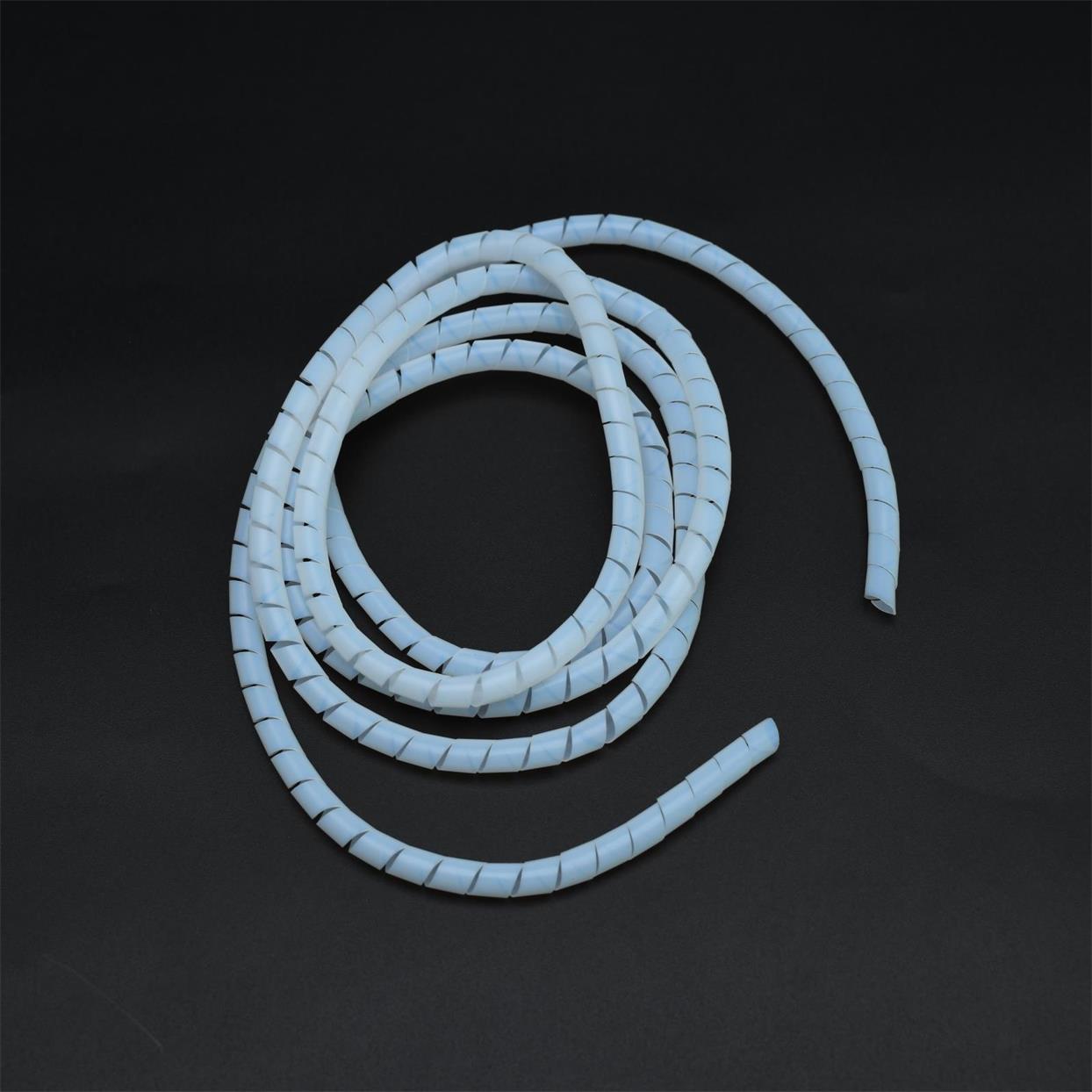
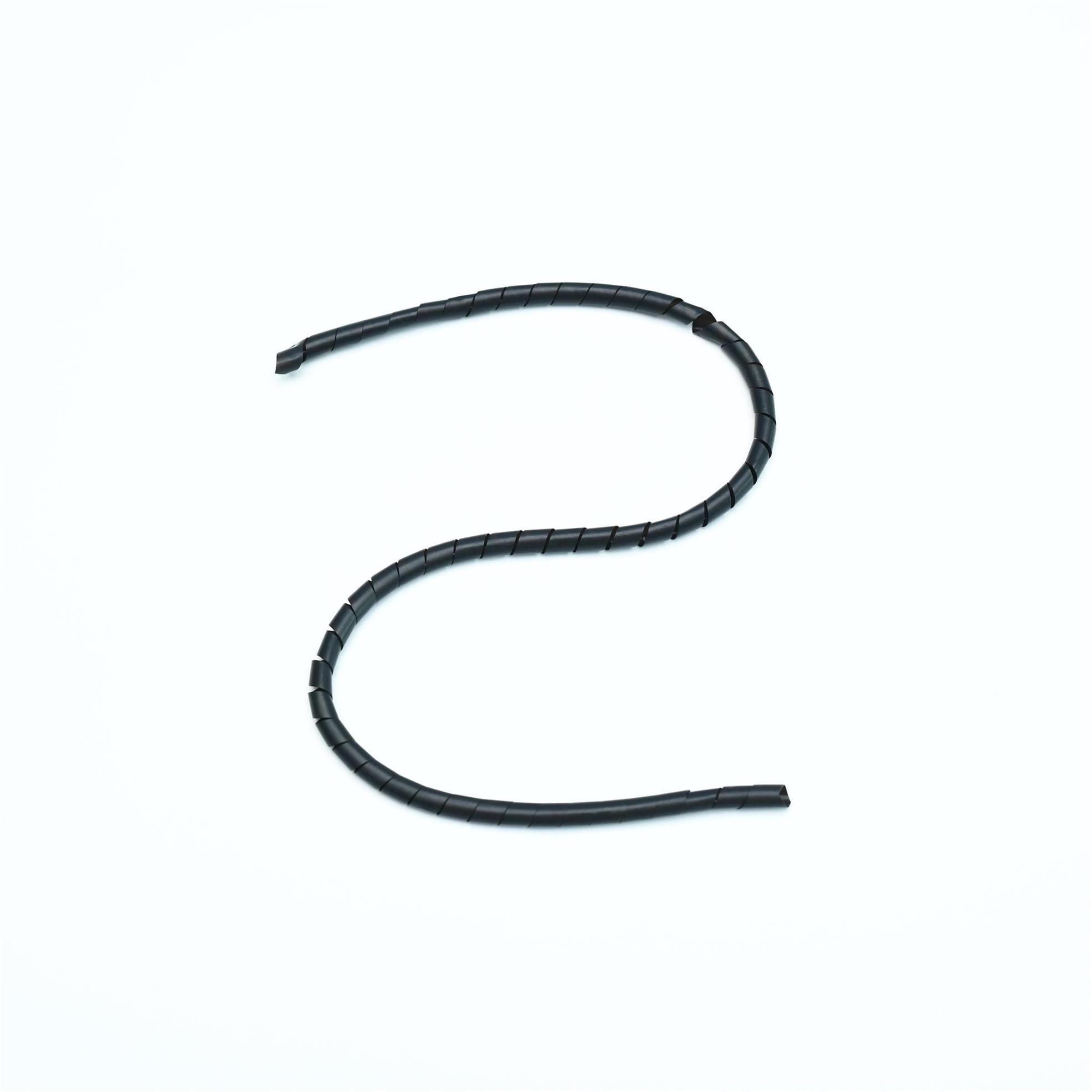
Spiral wrap tubing is a helically cut protective tube designed to organize, bundle, and protect wires, hoses, pneumatic lines, and cable assemblies. Rather than forming a completely enclosed sleeve, the tubing is manufactured with a continuous spiral opening that wraps around existing cables.
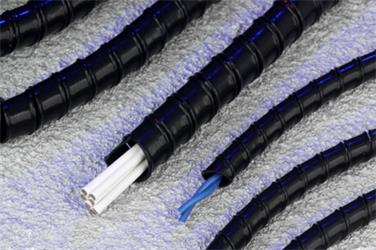
Because the tubing can be installed after the wiring has already been assembled, it eliminates the need to disconnect connectors or terminals. Engineers simply wrap the tubing around the cable bundle, allowing individual wires to exit wherever needed while maintaining protection against abrasion and mechanical wear. This wrap-cut structure is a key feature of PTFE spiral wrap tubing.
How Does PTFE Spiral Wrap Tubing Work?
The working principle is surprisingly simple yet highly effective.
The tubing is produced from polytetrafluoroethylene (PTFE), a fluoropolymer recognized for its outstanding chemical stability and temperature resistance. During manufacturing, a precision spiral cut is made along the entire length of the tube.
When compressed slightly, the spiral opening expands, allowing cables to be inserted. Once released, the tubing naturally wraps around the cable bundle through its own elasticity, providing continuous protection while still permitting future modifications.
Unlike heat shrink tubing, spiral wrap tubing does not permanently lock onto the cable. This means wires can be added, removed, or rerouted without replacing the protective cover, making it particularly suitable for systems requiring regular maintenance.
Why PTFE Makes the Difference
Although spiral wraps are available in polyethylene, nylon, and polypropylene, PTFE offers substantially higher performance.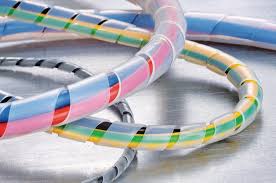
Its molecular structure contains extremely strong carbon-fluorine bonds, giving the material exceptional resistance to heat, chemicals, UV exposure, moisture, and aging. PTFE spiral wrap tubing typically operates across an exceptionally wide temperature range of approximately -200°C to +260°C, making it suitable for environments where conventional plastics may soften, crack, or become brittle.
Additional benefits include:
Outstanding dielectric insulation
Excellent flame resistance
Low coefficient of friction
High abrasion resistance
Excellent flexibility around tight bends
Long service life
Reusable construction
Minimal maintenance requirements
Spiral Wrap Tubing vs. Heat Shrink Tubing
 Many engineers ask whether they should use spiral wrap tubing or heat shrink tubing.
The answer depends on the application.
Heat shrink tubing creates a permanent, sealed insulation layer by shrinking tightly around wires after heating. It is ideal for electrical insulation, waterproof sealing, and strain relief.
By comparison, PTFE spiral wrap tubing focuses on cable organization and mechanical protection. Since it wraps around the cable instead of shrinking onto it, wires remain accessible for future repairs or upgrades. It is also reusable, unlike most heat shrink products. These functional differences make each solution suitable for different engineering requirements.
How to Choose the Right Spiral Wrap Tubing
Selecting the correct spiral wrap tubing begins with understanding the application.
1. Measure Cable Bundle Diameter
Always measure the maximum outside diameter of the completed cable bundle rather than individual wires. Selecting tubing that is too small makes installation difficult, while oversized tubing may not provide adequate retention.
2. Consider Operating Temperature
For office electronics or light-duty equipment, standard polymer spiral wraps may be sufficient.
However, aerospace, EV battery systems, industrial furnaces, semiconductor equipment, and chemical processing plants generally require PTFE spiral wrap tubing because of its superior thermal stability.
3. Evaluate Chemical Exposure
If the installation will encounter hydraulic oil, acids, solvents, fuels, or aggressive cleaning agents, PTFE provides significantly better long-term resistance than conventional plastics.
4. Consider Maintenance Requirements
Applications requiring frequent inspection, cable replacement, or future expansion benefit from reusable spiral wrap tubing, since wires can enter or exit the bundle without dismantling the entire protection system.
Installation Best Practices
Proper installation improves both appearance and service life.
Professional installers generally follow these steps:
Straighten and organize the cable bundle.
Select tubing with an appropriate inside diameter.
Begin wrapping from one end while maintaining even tension.
Allow the spiral opening to expand naturally around the wires.
Secure both ends using cable ties or clamps if the assembly will experience heavy vibration.
Because PTFE spiral wrap tubing is flexible, installation can usually be completed without specialized tools or heat sources.
Common Mistakes to Avoid
Even premium materials can underperform if used incorrectly.
Typical installation mistakes include:
Selecting an undersized spiral wrap.
Installing over twisted cable bundles.
Ignoring vibration at cable entry points.
Failing to secure the tubing ends.
Using standard polyethylene wrap in high-temperature environments.
Choosing chemical-incompatible materials.
Selecting the correct material is often more important than simply selecting the correct size.
Applications Across Modern Industries
Today, spiral wrap tubing is widely used wherever cables require protection while remaining easily accessible.
Typical applications include:
Electric vehicle battery harnesses
Aerospace electrical systems
Industrial automation equipment
Robotics and motion-control systems
Semiconductor manufacturing equipment
Laboratory instruments
Medical devices
Chemical processing plants
Telecommunications cabinets
Railway electrical systems
Its ability to combine cable organization, abrasion resistance, flexibility, and easy maintenance makes PTFE spiral wrap tubing particularly valuable in environments where reliability and serviceability are equally important.
Looking Ahead
As equipment becomes more intelligent and wiring systems more complex, cable protection solutions must deliver more than basic organization. Engineers increasingly expect products that simplify maintenance, reduce downtime, and withstand harsh operating conditions.
By combining a reusable spiral-cut design with the exceptional performance of PTFE, spiral wrap tubing continues to provide a practical solution for modern cable management. Whether protecting industrial wire harnesses, routing sensitive control cables, or organizing high-temperature electrical systems, PTFE spiral wrap tubing offers a balance of durability, flexibility, and long-term reliability that conventional cable protection products often cannot match.