




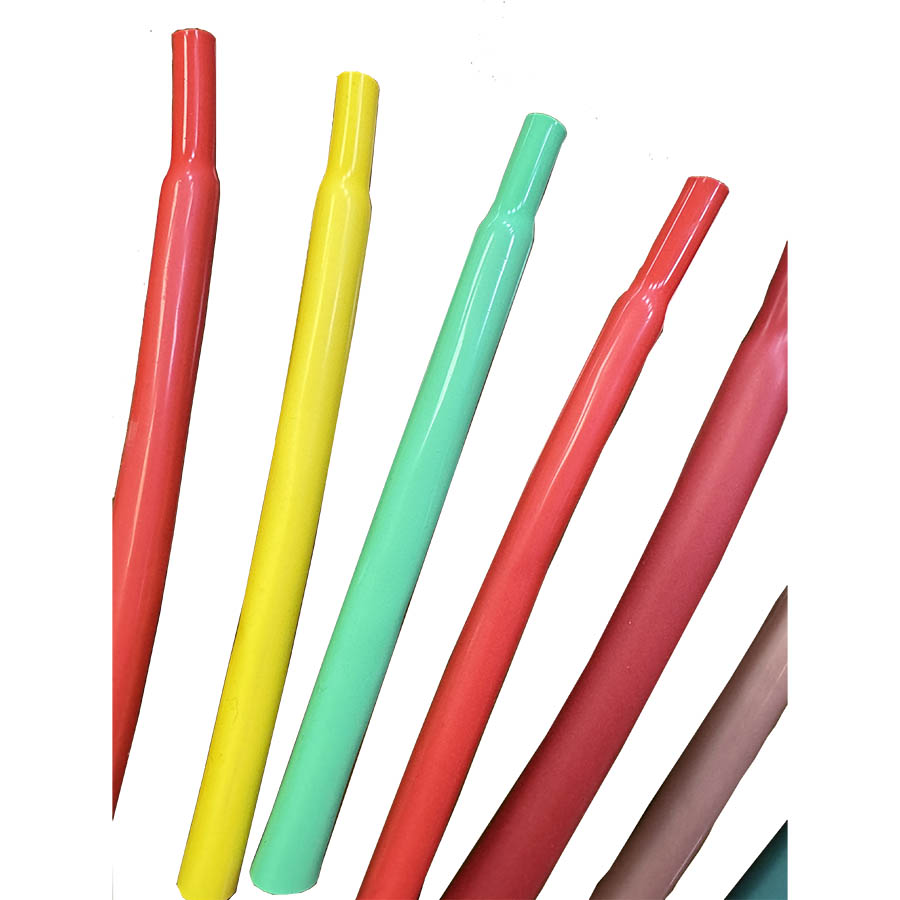
High-temperature Silicone Heat Shrink tubing is a specialized elastomeric sleeve engineered to provide continuous electrical insulation and environmental sealing across extreme temperatures from -60°C to well over +200°C. Unlike standard polyolefin tubing, which fails above 135°C, or rigid fluoropolymers like PTFE that require extreme shrinking temperatures (>320°C), silicone heat shrink combines extreme thermal endurance with superior flexibility, high dielectric strength (25 kV/mm), and a low installation temperature. For engineers designing wiring harnesses for electric vehicles, aerospace sensors, and medical devices, silicone heat shrink is the primary solution when conventional sleeving becomes too brittle or stiff.
If you are evaluating custom wall thicknesses, non-standard diameters, or certified biocompatible compounds, explore our patented Heat-Shrinkable Silicone Rubber Tubing or request technical data sheets directly from our engineering team.
Key Material Trade-Offs: Silicone vs. PTFE vs. Polyolefin
When selecting protective sleeving for harsh operating environments, material choice directly dictates long-term reliability and assembly efficiency. The table below outlines how continuous silicone heat shrink compares against commercial polyolefin and fluoropolymer alternatives:
| Property / Metric | Standard Polyolefin | Silicone Heat Shrink (Patented) | PTFE Fluoropolymer |
|---|---|---|---|
| Continuous Operating Temp | -55°C to +125°C / 135°C | -60°C to +200°C+ | -65°C to +260°C |
| Shrink Recovery Temperature | 90°C to 120°C | 135°C to 175°C | 320°C to 340°C |
| Flexibility & Bend Radius | Moderate flexibility | Extremely flexible (Rubber-like) | Rigid, prone to kinking |
| Dielectric Breakdown Voltage | 15 to 20 kV/mm | 25 kV/mm | 25 to 30 kV/mm |
| Risk to Sensitive Substrates | Low | Low (Safe heat gun shrinking) | High (Heat damages internal wires) |
| Flame Retardant Compliance | UL 224 | UL / C-UL VW-1, MIL-Spec | UL 94 V-0 |
When Should You Replace Polyolefin or PTFE with Silicone?
While polyolefin is cost-effective for general cabinet wiring, it rapidly hardens, cracks, and degrades when exposed to continuous ambient temperatures above 135°C or repetitive mechanical vibration. Silicone is the required upgrade in the following scenarios:
1. High-Vibration, Tight-Radius Cable Routing
In automotive electric powertrains (EV busbars and motor lead cables), lines must flex during operation. PTFE sleeves can pinch or crack copper wire strands under dynamic bending. Silicone remains elastic, dampening vibrations and protecting delicate soldered joints.
2. Protection of Heat-Sensitive Wire Components
Although PTFE heat shrink tubing offers exceptional chemical resistance, its high shrinkage threshold (>320°C) often damages internal sensors, solder preforms, or lower-temp primary wire jackets during assembly. Patented silicone heat shrink fully recovers at 150°C–175°C, providing a safe process window while maintaining >200°C long-term service performance.
3. Medical and Sanitary Fluid Applications
Standard industrial tubings can leach plasticizers under heat or steam sterilization. Medical-grade silicone formulations satisfy FDA and USP Class VI biocompatibility, resisting repeated autoclave cycles without discoloration or dimensional distortion.
Need custom dimensional verification? Contact our engineering team with your inner diameter (ID) and target wall thickness for technical review and sample dispatch within 24 hours.
Buyer Evaluation Matrix: What to Look for in a Silicone Tubing Manufacturer
Because high-temperature crosslinking and expanding of silicone elastomer requires sophisticated proprietary tooling, quality varies significantly between trading brokers and integrated extrusion facilities. Sourcing managers should verify the following capabilities before placing volume purchase orders:
| Evaluation Dimension | Critical Quality Benchmark | Gendian Manufacturing Standard |
|---|---|---|
| Patented Manufacturing Process | Verified stable expansion ratio without longitudinal split risk | Chinese National Invention Patent (ZL 200710076839.3) |
| Flame Retardant Grade | Self-extinguishing flammability certification | UL & C-UL certified, passing VW-1 vertical flammability test |
| Environmental & Safety Testing | Global compliance certificates with updated test reports | Fully compliant with RoHS, REACH, FDA, and SGS verified |
| Dimensional Customization | Metric and imperial sizing, variable wall thicknesses, custom reels | In-house custom extrusion tooling with precision laser micrometer control |
| Factory Production Capacity | Consistent batch lead times and raw material traceability | 5,000 m² factory base with ISO 9001 certified quality management |
Technical Pre-Inquiry Checklist: What Information to Prepare
To expedite accurate quotation, tooling evaluation, and free sample arrangement, prepare the following parameters when sending your inquiry:
| Parameter | Required Detail | Engineering Purpose |
|---|---|---|
| Substrate Outside Diameter (OD) | Maximum and minimum OD of the item to be covered | Determines optimal expanded ID and recovered ID (shrink ratio) |
| Continuous & Peak Temperature | Operating temperature range (e.g. -50°C to +200°C) | Ensures correct silicone compound selection and vulcanization |
| Dielectric & Voltage Requirements | Operating voltage (e.g., 600V, 10kV) or breakdown limits | Dictates minimum recovered wall thickness specification |
| Certification Standards | UL VW-1, FDA food grade, MIL-DTL, or specific OEM norms | Aligns quality control records and compound formulation |
| Packaging Format | Spool/reel lengths or precut pieces (e.g., 50mm, 100mm) | Optimizes automated harness manufacturing workflows |
Frequently Asked Questions
What shrink ratios are available for silicone heat shrink tubing?
Standard silicone heat shrink tubing is available in 1.5:1 and 2:1 shrink ratios. Because silicone is an elastomeric material, maintaining dimensional consistency across higher ratios requires specialized expansion technology. Custom expansions are supported based on tooling assessment.
Can silicone heat shrink be installed using a standard industrial hot air gun?
Yes. Silicone heat shrink recovers reliably at temperatures between 135°C and 175°C. A standard industrial heat gun, heat tunnel, or conveyor oven provides sufficient heat for rapid, uniform radial recovery without thermal degradation.
How does silicone heat shrink resist environmental exposure compared to EPDM?
Silicone features a high-energy siloxane (Si-O-Si) backbone, rendering it far more resistant to UV radiation, ozone, weather aging, and corona discharge than carbon-backbone rubbers like EPDM. It retains its flexibility in sub-zero climates down to -60°C where EPDM stiffens.
To receive technical drawings, official UL test data, or to request custom-extruded prototypes for your application, visit our Contact & Engineering Support page or email our technical sales department directly at intlsales@cngdg.com.